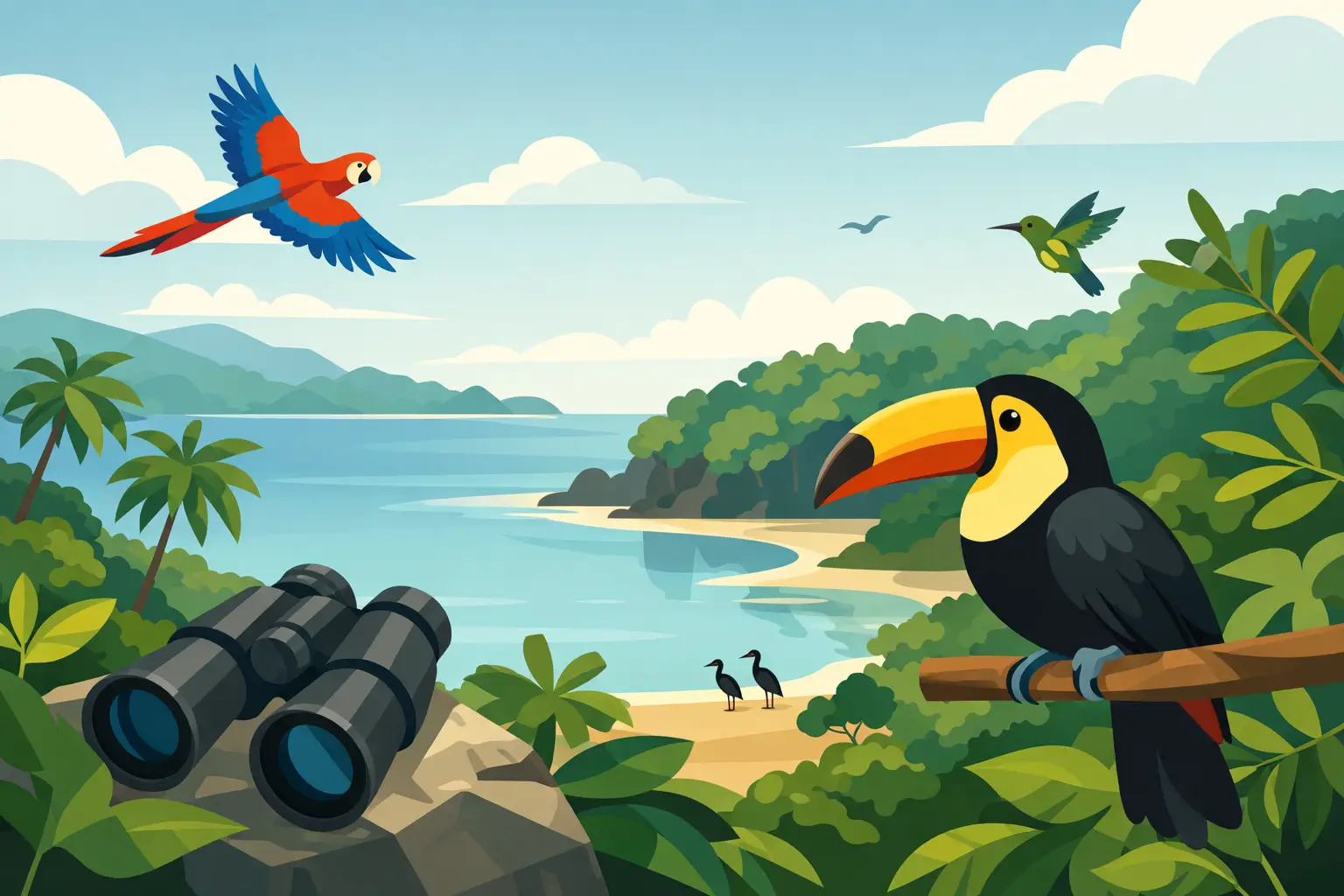

The first loud call usually comes before sunrise. Then another answers from deeper in the trees, and within minutes, the forest feels wide awake. Bird watching Osa Peninsula trips have that effect on people – even travelers who never planned to carry binoculars home are talking about macaws, trogons, and antbirds like old favorites.
If you are heading to Costa Rica for wildlife, the Osa Peninsula is one of those places that feels almost unfairly rich. Rainforest runs into mangroves, rivers empty toward the sea, and the edge habitats between jungle, gardens, beaches, and wetlands create constant movement. That matters for birders because you are not looking at one habitat and one set of species. You are moving through a living mosaic, and that gives every morning walk a little suspense.
Why bird watching in the Osa Peninsula stands out
The Osa is famous for biodiversity in general, but for birding, the appeal is more specific. You have a real chance to see high-profile species that many travelers dream about – scarlet macaws crossing overhead in pairs, toucans on fruiting trees, several hummingbirds working flowering shrubs, and the kind of forest birds that reward patience instead of speed.
It is also one of the few places where serious birders and casual nature travelers can both have a great experience. If your goal is a long species list, the peninsula gives you enough habitat variety to keep you busy for days. If you simply want a few unforgettable sightings during a family trip, you can get that too without turning the whole vacation into a checklist.
The trade-off is that birding here is wonderfully wild, not manicured. Trails can be muddy, rain can change a morning plan fast, and visibility in dense forest is not always easy. The payoff is that the place still feels real. You are not watching birds in a curated park setting. You are stepping into an active habitat.
Best habitats for bird watching, Osa Peninsula travelers should know
A lot of visitors ask for the single best birding spot, but on the Osa, it depends on what you most want to see. The peninsula works best when you think in habitats rather than one magic location.
Rainforest trails
Primary and secondary forests are where the classic Osa feeling really hits. This is where you listen as much as you look. Trogons, woodcreepers, manakins, antbirds, and flycatchers can all show up, but they rarely pose on demand. A local guide makes a big difference here because many birds are first found by sound, movement, or a quick shape on a shaded branch.
Early morning is especially good, before the heat and heavier rain settle in. If you are staying near forest access, even a short pre-breakfast walk can produce more than a long midday hike.
Mangroves and river edges
Mangroves feel different right away – still water, tangled roots, and a quieter kind of suspense. These areas are excellent for kingfishers, herons, egrets, and other species tied to wetland habitats. Depending on conditions, you may also pick up raptors overhead or smaller birds working the edges where mangrove meets open water.
Boat-based outings can be excellent in these zones, especially for photographers who want cleaner lines of sight than dense rainforest usually allows. The trade-off is that some forest specialists are less likely here, so this is best seen as a complement to inland birding, not a replacement.
Coastal edges, gardens, and open country
Some of the easiest birding on the Osa happens close to where you sleep, eat, or wait for a ride. Fruit trees, flowering plants, beachside edges, and open clearings attract a surprising variety of species. This is often where casual birders first connect with the experience because visibility is better and birds can be more approachable.
If you are traveling with mixed interests, these easy-access areas are ideal. One person can sip coffee while another scans for tanagers and orioles, and nobody feels like the day has turned into a demanding expedition.
What birds might you see?
Scarlet macaws are often the stars, and for good reason. They are loud, bold, and unforgettable in flight. Seeing them in the wild over the Osa canopy is the kind of moment that stays with people long after the trip.
Toucans are another major draw, especially for travelers hoping for those unmistakable tropical silhouettes. Depending on where you bird, you may also encounter trogons, parrots, parakeets, hummingbirds, motmots, hawks, herons, tanagers, and woodpeckers. More patient observers may start to appreciate the smaller, less flashy birds too – the ones that make a morning feel rich rather than dramatic.
This is where expectations matter. Wildlife is never guaranteed, and the Osa rewards patience more than rushing. A day with fewer headline birds can still be a wonderful birding day if you slow down enough to hear the forest and notice behavior, not just color.
When to go birding on the Osa
Birding is possible year-round, but your experience changes with weather, trail conditions, and your own comfort level. In the drier stretches, access can be easier, and mornings may feel simpler for visitors who are not used to tropical travel. In wetter periods, the forest can feel even more alive, greener, and quieter in a beautiful way, though muddy trails and heavier showers are part of the package.
For most travelers, the best daily strategy matters more than the exact month. Start early. Rest in the hottest part of the day. Then head out again later in the afternoon if conditions are good. Birds often give you more activity in those cooler windows, and you will enjoy the outing more, too.
If photography is part of your trip, softer morning light is usually your friend. If your goal is pure observation, a cloudy morning can actually help because birds may stay active longer.
Do you need a guide?
You can absolutely enjoy birding on your own in the Osa, especially around lodges, gardens, easy-access roads, and short trails. If you are already a confident birder, independent time can be deeply rewarding.
That said, a local guide is often the difference between seeing birds and really understanding what you are seeing. Guides know calls, feeding trees, seasonal patterns, and the subtle places where birds like to perch. They also help with logistics, which matters more on the Osa than in easier, more built-out destinations.
For first-time visitors, one guided outing early in the trip is a smart move. You can learn the rhythm of the area, get familiar with common species, and then enjoy the rest of your stay with sharper eyes and ears. If you are planning your route, the directory at https://Osapeninsulacostaricaapp.davidroyfulton.com can help you find local tour providers and places to stay that fit a bird-focused trip.
How to plan a better birding trip here
The best Osa birding trips are usually not the busiest ones. Give yourself enough time in one area instead of trying to race across the peninsula every day. Birds are easier to notice when you are not constantly in transit, and the whole experience feels more connected when you wake up in the same soundscape for a few mornings in a row.
Choose lodging with habitat nearby if birding is a real priority. A place near forest, river edge, or productive gardens can turn ordinary downtime into birding time. Even ten minutes before breakfast can produce a memorable sighting.
Bring the basics and keep them simple. Good binoculars matter. Lightweight neutral clothing helps. A dry bag or rain cover is wise. If you use a camera, be realistic about conditions. Humidity, sudden rain, and low light are part of the experience, so flexibility beats perfection.
Most of all, leave room for surprise. One of the best things about the Osa Peninsula is that the line between planned activity and accidental wildlife encounter gets very thin. You may head out looking for a specific species and end up standing still for twenty minutes watching something else entirely because the moment feels too good to interrupt.
That is really the charm of birding here. The Osa does not ask you to conquer it or complete it. It asks you to slow down, look up, and let the forest show you what it wants to share.
Leave a Reply