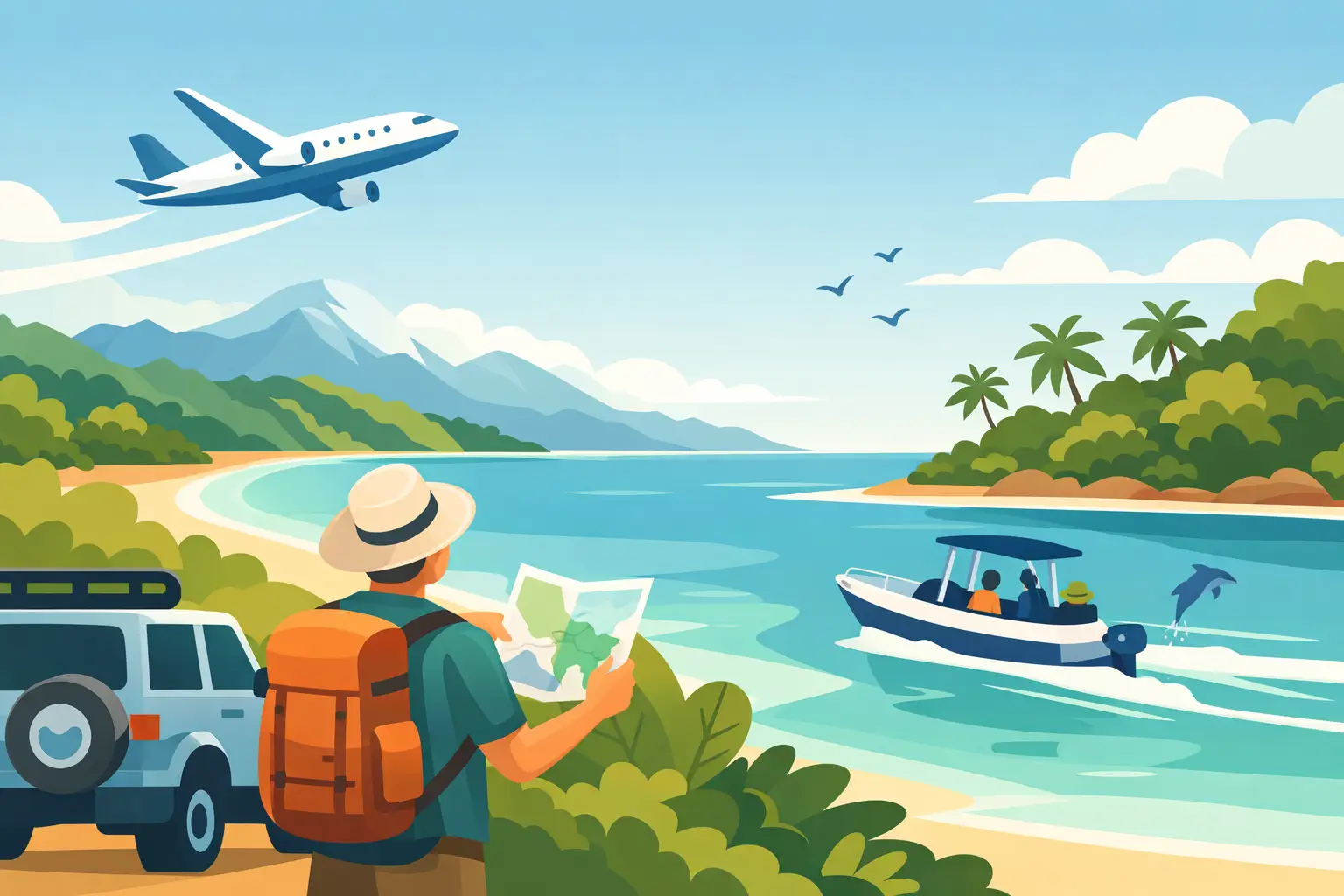
The first surprise about planning a trip here is that getting to the Osa is part of the experience. If you are researching how to get to Osa Peninsula, you are not just figuring out transportation – you are choosing what kind of arrival you want. A quick hop over rainforest ridges, a slow road trip past palm-lined beaches, or a boat ride into one of the wildest corners of Costa Rica all set a different tone for the days ahead.
That matters on the Osa. This is not a place where you rush through an airport transfer and forget about it. The peninsula feels remote because, in many ways, it still is. That wild feeling is part of the magic. It also means your best route depends on where you are staying, how comfortable you are with rough roads, your budget, and how much time you want to spend in transit.
How to get to Osa Peninsula from San Jose
Most travelers begin in San Jose, either after landing at Juan Santamaria International Airport or after a night in the Central Valley. From there, you have four main options: domestic flight, rental car, shared or private shuttle, or a combination of road and boat.
If your destination is Puerto Jimenez, Drake Bay, Carate, Matapalo, or Cabo Matapalo, the smartest route is not always the same. The peninsula is large, roads can be slow, and some lodges are much easier to reach than others.
Flying is the fastest option
For many visitors, the simplest answer to how to get to Osa Peninsula is to fly domestically from San Jose. Small regional flights usually go to Puerto Jimenez or Drake Bay, depending on schedules and the season.
This is the best choice if you have limited vacation time, are traveling with kids, or want to avoid a long transfer after an international flight. The views alone are worth it. On a clear day, you may see the Pacific coastline, river mouths, thick forest, and the broad green sweep that makes the Osa feel so untouched.
The trade-off is cost and luggage limits. Domestic airlines in Costa Rica often have stricter baggage rules than US travelers expect. If you are bringing camera gear, surfboards, or heavy adventure equipment, check the baggage details before booking. Weather can also affect timing, especially in the rainy season, so it helps to keep your arrival day flexible if possible.
Driving gives you freedom
If you like road trips, renting a car can be a great way to reach the Osa. It gives you flexibility to stop for lunch, stretch out at viewpoints, and explore beaches or small towns along the southern Pacific coast.
From San Jose, the drive usually follows the Costanera Sur south toward Palmar Norte, with onward routes depending on your final stop. Puerto Jimenez is generally the easiest main town to reach by road. Drake Bay is more complicated by car, especially in wet conditions. Cabo Matapalo and Carate can involve rougher stretches, river crossings in some areas, and slower travel than the map suggests.
A 4×4 is often the safer choice, especially if you are staying beyond Puerto Jimenez or visiting during the green season. Distances in Costa Rica can look short, but road conditions make travel times much longer than in the US. A route that seems manageable on paper can turn into an all-day journey once you factor in potholes, narrow bridges, and rain.
That said, driving can be beautiful. You will pass cattle country, oil palm plantations, mountain views, and roadside fruit stands before the landscape starts feeling more and more jungle-heavy. If you enjoy the journey as much as the destination, this route has real appeal.
Shuttles are a good middle ground
If you do not want to drive but also do not want to pay for a domestic flight, shared or private shuttles make a lot of sense. They are popular with independent travelers, couples, and small groups who want a more relaxed transfer.
Shared shuttles are more budget-friendly, though they run on fixed schedules and may include several stops. Private shuttles cost more but give you direct service and more control over pickup times. For families, photographers carrying gear, or travelers heading straight to a remote lodge, private transport can be worth the extra cost.
This option is especially useful if you are visiting Puerto Jimenez. For Drake Bay, ground transport is often paired with a boat transfer, which brings us to one of the most memorable ways to arrive.
Reaching Drake Bay and other remote areas
Some parts of the peninsula are more naturally reached by water. Drake Bay is the classic example.
Boat transfers are part of the adventure
Many travelers heading to Drake Bay travel by road to Sierpe and then continue by boat through the mangroves and along the coast. This is not just transportation. It feels like an introduction to the region itself – humid air, tangled estuaries, flashes of birds overhead, and that growing sense that you are leaving the everyday world behind.
If you are staying near Corcovado access points on the Drake side, this route is often the most practical. It can also be more enjoyable than a rough overland drive. The main thing to keep in mind is timing. Boat schedules can be tied to tides, daylight, and weather. If you are connecting from San Jose the same day, leave plenty of margin.
Pack accordingly, too. Soft bags are easier than hard suitcases, and anything that should stay dry needs proper waterproof protection. Beach landings happen in some locations, so do not assume your shoes will stay pristine.
Which arrival point is best?
Puerto Jimenez is usually the easiest hub for travelers who want more services, easier road access, and a base for exploring the eastern side of the peninsula. It works well for trips that include Matapalo, Cabo Matapalo, and some Corcovado departures.
Drake Bay is ideal for travelers focused on remote jungle lodges, boat access, snorkeling trips to Cano Island, and the more tucked-away side of Corcovado. It feels more off-grid from the start.
If your lodge is in Carate or near Sirena access routes, your operator may recommend a very specific arrival plan. This is one place where it pays to ask your hotel or tour company before locking in flights or a rental car.
What to know before you go
The best advice on how to get to Osa Peninsula is simple: plan your transfer around the realities of the region, not just the cheapest fare or shortest line on a map.
Rain changes things. During the wetter months, road conditions can deteriorate quickly, and travel can take longer than expected. River crossings and muddy sections may be manageable one week and difficult the next. If you are arriving in late afternoon, remember that darkness comes early in the tropics, and unfamiliar roads feel much longer after sunset.
It is also worth thinking about energy. If you land internationally and then try to drive several more hours the same day, that can be exhausting. Plenty of travelers enjoy an overnight in San Jose or along the coast before continuing south. Others prefer to fly straight in and start their Osa trip rested.
Budget matters too, but so does value. A domestic flight costs more upfront, yet it may save a full day of vacation time. A rental car opens up flexibility, but only if you are comfortable driving in variable conditions. A boat transfer can be unforgettable, but not everyone loves traveling with luggage on the water.
The easiest way to plan your arrival
Because the peninsula includes several distinct destinations, the easiest way to avoid a frustrating transfer is to start with your hotel, ecolodge, or tour base and work backward. Once you know exactly where you are staying, transportation becomes much clearer.
This is where a local destination directory can be genuinely helpful. Instead of guessing which route works for a place near Puerto Jimenez versus one outside Drake Bay, you can look at accommodations, tour operators, transport providers, and local contacts in one place and book directly with the businesses that actually operate there. That direct connection usually gets you better arrival instructions than a generic booking platform ever will.
On the Osa, the journey in is your first taste of the peninsula’s rhythm. You hear more birds, see fewer buildings, and feel the landscape getting bigger and wilder around you. Give yourself enough time, choose the route that fits your trip, and let the road, runway, or river ease you into Pura Vida.
Leave a Reply