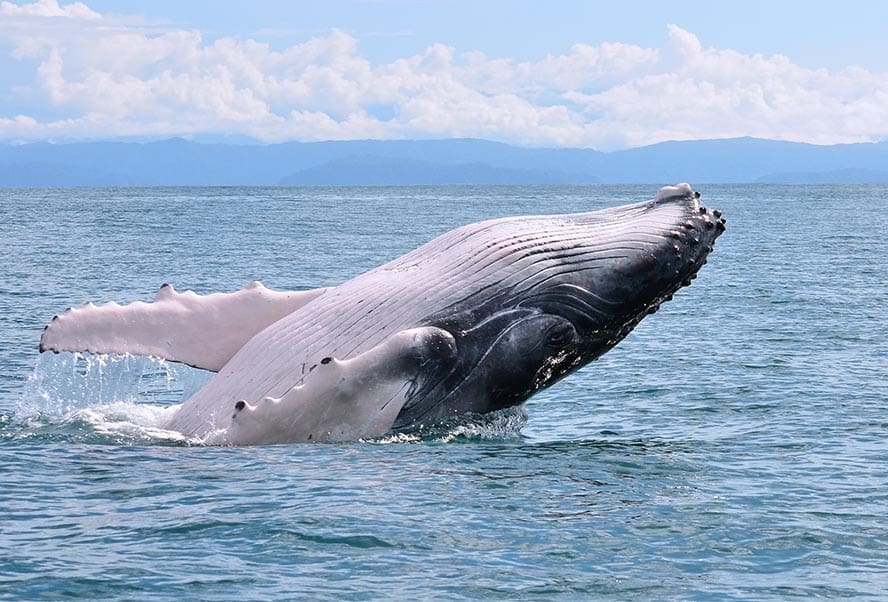
- Photo credit toboga
Whale Watching Tours in Osa Peninsula: An Unforgettable Experience
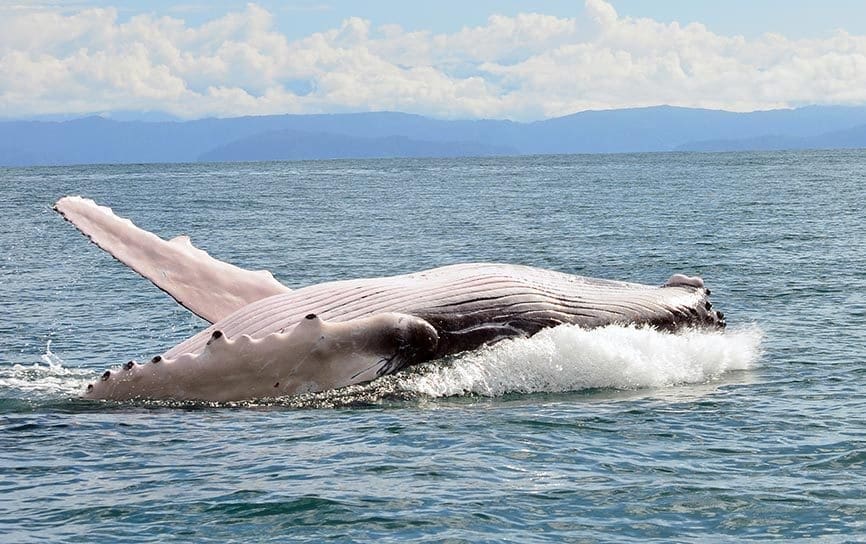
Whale watching in the Osa Peninsula is, in one word, amazing. These majestic humpback whales arrive in our warm tropical waters starting in July and stay through the end of October. This is a critical time for them as they migrate thousands of miles to raise and nurture their newborn calves in the safety of the Golfo Dulce.
Migration of the Humpback whales to the Osa Peninsula.
Both the northern humpback whales and southern humpback whales, as well as the central American humpback whales, visit the Osa Peninsula.
When I used to work as a boat captain in Alaska, I would see many humpback whales. Some of them would come over to the boat for a visit. We would shut off my main engines. The humpback whales came close, and I would throw over some cod fish for them. The whale and I would have a conversation, well, it was a one way conservation. See you on the Golfo Dulce as the whale dove deep into the cold waters of Alaska.
To think that a humpback whale in Alaska would annually migrate to the Golfo Dulce in the Osa Peninsula, could it be true?
The northern migration of the humpback whale to the Golfo Dulce is the longest migration of any mammal in the world. These beautiful creators travel over 3000 miles.
Humpback whales have very good memories; all whales do. Whales will remember a person or a boat. I once had a Minke whale hang out with us all day when we were fishing. We came back to the same fishing spot a month later, and sure enough, the minke whale showed back up. It would raise its head out of the water and take a look at us working on deck.
A Personal Connection with Nature
I have personally seen whales swimming right along the shoreline. Once, while kayak fishing, I heard a massive breach right behind me; I turned around to find a whale curiously watching me from just a few yards away. We look at each other. I see you made it to the Golfo Dulce. The massive whale dove deep into the water and slapped its tail softly on the surface.
Tail slapping .
When a whale slaps its tail on the water, depending on how hard they slap have different meanings. A soft slap indicates play or recognition. A hard slap is a sign of aggression, or you are too close to the whale. So, the soft slap of the whale when I was kayaking was a sign of recognition I would like to think so.
I was fortunate enough to be on a tagging and identifying charter in the Bearing Sea for killer whales. I was the cook! We had Greenpeace, biologist, and the boat crew. I had to cook different meals, from meat and potatoes to all vegan. by the end of the charter, the vegans were eating fish!
Keep a safe distance
By law, you have to be at least 100 meters away from whales.
Photographing Whales
Do not rest your camera on the boat. All boats have a vibration that will affect the sharpness of your photos. Set your shutter speed to at least 500th of a second. Set your focus meter to center or spot focus. Adjust your ISO as low as possible to shoot at 500th of a second. Set your shooting mode to continuous.
What to Expect on Your Tour
Most local charter boats offer dedicated whale watching excursions. A typical tour is a vibrant showcase of marine life, including Humpback Whales (mothers and calves), playful dolphin pods, and frequently spotted sea turtles. Many tours conclude at a secluded reef where you can snorkel among tropical fish.
Recommended Local Guides
For a top-tier experience, we recommend booking with John at Cabinas Jimenez. His tours are highly rated and include snorkeling equipment, fresh fruit, and water. The best way to reach John is directly through his hotel website: www.cabinasjimenez.com

- Photo credit toboga
